
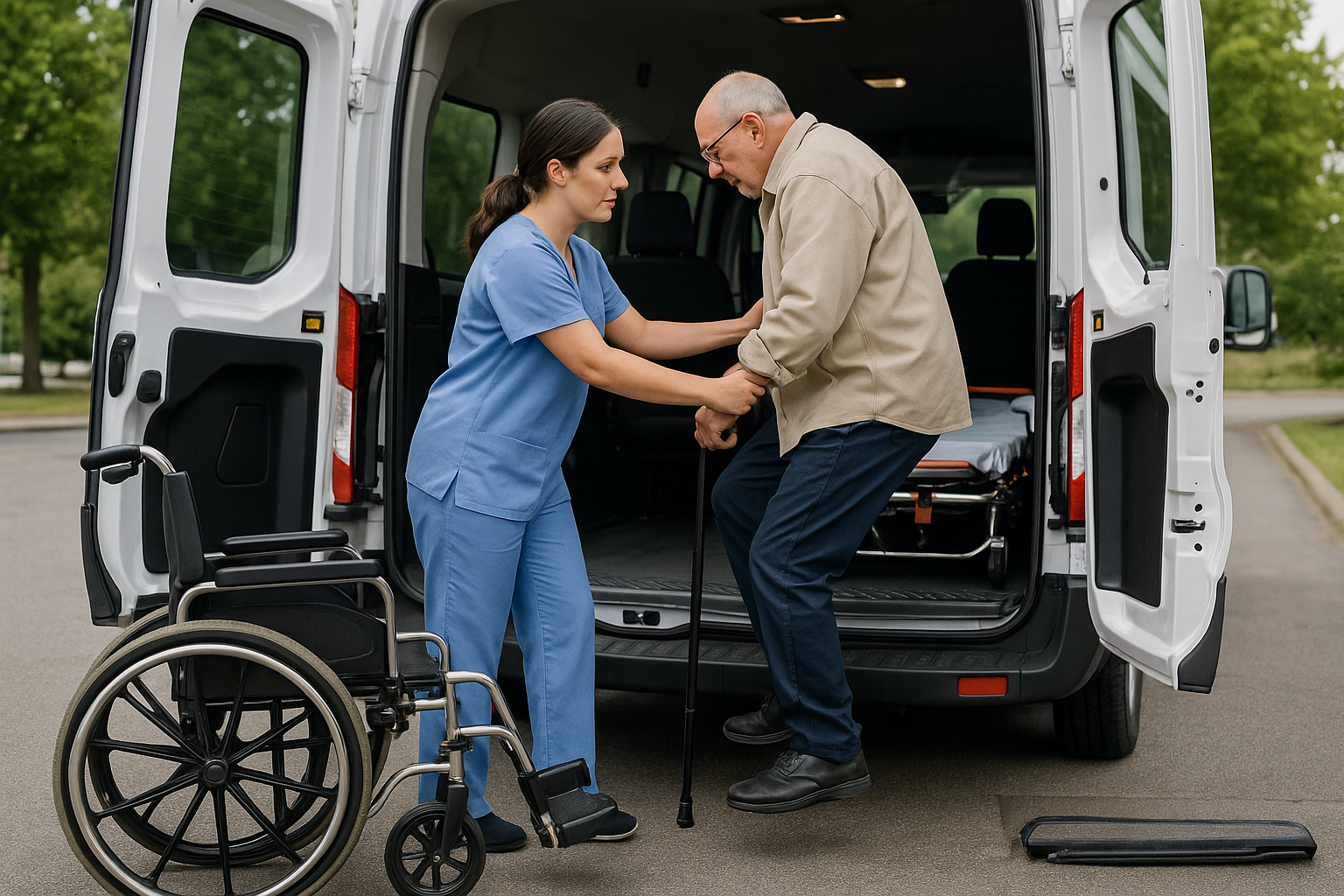
Medical & Mobility Transportation (Wheelchair & Stretcher)
Title: Door-Through-Door: Safer Medical Transportation for Complex Needs
Author: Alliance Care Specialists (ACS) • Region: Georgia
Why this matters
Appointments keep care plans moving—but getting there can be the hardest step. Our door-through-door service reduces no-shows and stress by handling transfers, timing, and handoffs end-to-end.
What we do
Wheelchair transport for clinics, dialysis, imaging, therapy, and post-op checks.
Stretcher/ambulance transport (when clinically indicated) via our licensed capabilities/partners, aligned with physician orders and payer rules.
Transfers & handoffs: bed/chair ↔ chair/stretcher ↔ vehicle ↔ clinic seat/room; oxygen per order; secure personal items and paperwork.
Coordination & summaries: confirm appointments, manage timing, and provide a simple trip note after each ride.
When stretcher is appropriate
Post-op non-weight-bearing, advanced mobility limits, high fall risk, oxygen-dependent or unstable conditions per physician order.
How it works
Pre-trip confirmation → time, location, special instructions.
Door-through-door assistance → safe transfers and clinic handoff.
On-call coordination → return trip timing + updates to family/caregiver.
Outcomes partners notice
Fewer missed visits and reschedules
Shorter clinic time and cleaner handoffs
Lower stress for families and facility staff
Quick prep checklist
ID, insurance card, meds list/allergies
Hydration/snack and sweater
Mobility aids labeled (cane/walker)
Clinic contact and caregiver phone
FAQs
Is this private-pay or covered? It depends on payer and medical necessity. We’ll help you review options; private-pay is available.
Can you pair transport with in-home support? Yes—scheduling allows aides/nurses to align with ride windows.
Do you wait onsite? When requested/scheduled, we coordinate on arrival, escort, and return.
Booking
404-655-4637 • acs@alliance-care.com • www.alliance-care.com
Have the appointment date/time, pickup address, and mobility needs ready—we’ll handle the rest.

Memory Loss & Dementia Support
Title: Dignity First: Calm, Predictable Memory Care at Home
Author: Alliance Care Specialists (ACS) • Region: Georgia
Why this matters
When memory changes begin, routine becomes medicine. Calm cueing, predictable rhythms, and gentle engagement can reduce anxiety, wandering risk, and late-night crises—keeping home life steady for everyone.
What we do
Daily rhythms & cueing: consistent wake/meal/rest blocks; step-by-step help with bathing, dressing, hydration, and medications.
Meaningful engagement: music, reminiscence, simple tasks/games that feel purposeful.
Safety supervision & redirection: fall- and wandering-aware support, low-stimulus techniques, evening wind-down.
Clinical oversight (when ordered/appropriate): Georgia-licensed RNs/LPNs administer medications, injections, basic wound care; monitor weight, appetite, skin, and behavior changes; share concise updates with the medical home.
How it works
Intake & home review → routines, triggers, and safety.
Care plan → simple daily schedule + do/don’t list for calm redirecting.
Consistent staffing → the same faces at the same times.
Light documentation → short notes track what’s working.
Outcomes families notice
Fewer panic moments and ED trips
Smoother personal care and better sleep
More confident caregivers; steadier days
Caregiver mini-toolkit
Offer two choices (keeps autonomy, cuts friction)
Use one-step prompts (“Let’s put on your sweater”)
Keep a hydration routine (small sips every hour)
FAQs
Do you coordinate with physicians and case managers? Yes—updates are shared as appropriate so plans stay aligned.
Can you help during evenings/overnights? Absolutely—routine is crucial then; we offer coverage.
Is nursing required? Not always. Nursing is provided only when ordered/appropriate; otherwise trained caregivers lead with RN oversight.
Getting started
404-655-4637 • acs@alliance-care.com • www.alliance-care.com
We’ll confirm location/needs, build a right-sized plan, and match consistent staff.

In‑Home Pediatric Skilled Nursing (RN/LPN)
In‑Home Pediatric Skilled Nursing (RN/LPN) — GAPP‑Aligned, Highly Professional Team
In‑Home Pediatric Skilled Nursing | GAPP‑Aligned Care in Georgia
Alliance Care Specialists provides one‑to‑one, high‑acuity pediatric nursing at home under Georgia’s GAPP program—delivered by a highly professional RN/LPN team with 17+ years of pediatric experience.
Why this service matters
When a child is medically fragile, home isn’t just the heart of family life—it’s the safest, most healing place to receive care. Our in‑home pediatric skilled nursing program brings hospital‑level competencies into living rooms across Georgia, helping families avoid unnecessary readmissions while keeping daily life as normal as possible.
Who we serve
Medically fragile infants and children enrolled in Georgia’s GAPP (Georgia Pediatric Program)
High‑acuity and hard‑to‑staff cases (e.g., ventilator/trach care, complex IV access, enteral feeding)
Birth, kinship, foster, and adoptive families; nonprofit and for‑profit foster homes
What makes our team different
Highly professional RN/LPN staff with 17+ years of pediatric experience
Rigorous vetting, reference checks, competencies, and skills labs
Clear documentation standards and safety checklists at every shift
Direct supervision and mentorship from our Head Nurse
Family‑centered bedside conduct—respectful, calm, and culturally sensitive
What families can expect
Intake & benefits check: We verify GAPP eligibility and help coordinate authorizations.
Home assessment: A nurse evaluates equipment, environment, and care goals.
Care plan & schedule: Individualized plan developed with the child’s providers, DFCS/CPA (if applicable), and caregivers.
Continuity of staffing: We prioritize consistent nurses to stabilize routines.
Continuous communication: Shift notes, vitals, and incident reporting keep everyone aligned.
Clinical scope
Airway: tracheostomy care, ventilator monitoring, suctioning, oxygen therapy
CVL/Ports: sterile access, flushing, dressing changes, infusion oversight
Enteral feeding: G‑tubes/NG, pump setup, site care, meds via tube
Seizure/respiratory monitoring, wound/ostomy care, vitals & documentation
Outcomes that matter
Fewer emergency visits/readmissions
Better caregiver confidence and capacity
Safer, more stable home routines for children and siblings
FAQs
Is this covered by GAPP? Many services are; we help families understand eligibility and authorizations.
How fast can staffing start? For urgent cases, we can often begin within days depending on authorizations and geography.
Do you coordinate with schools and therapists? Yes—we can align care plans with IEPs/504s, therapy schedules, and durable medical equipment vendors.
Ready to explore GAPP‑aligned in‑home nursing? 404‑655‑4637 · acs@alliance‑care.com · www.alliance‑care.com
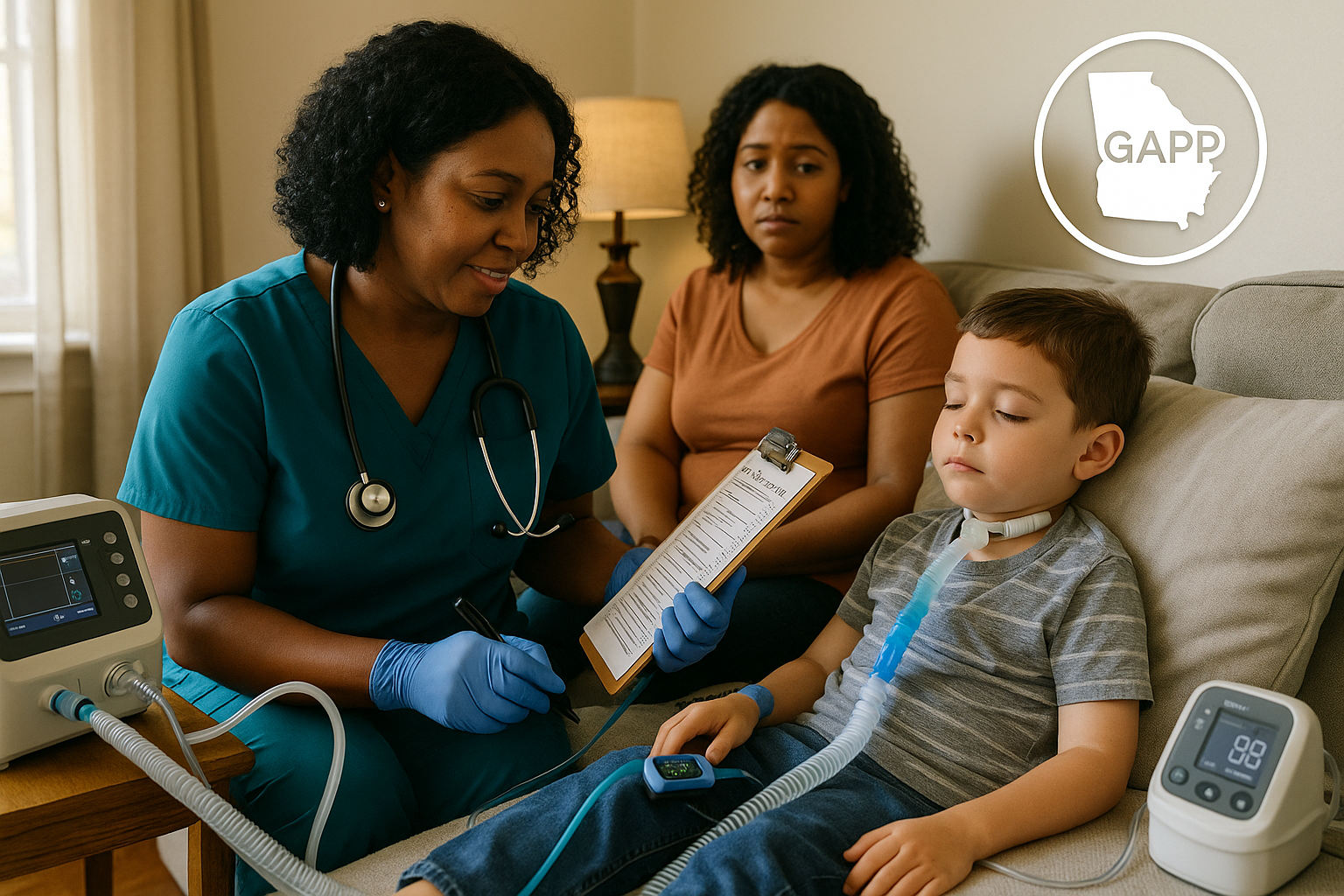
Airway & Complex Respiratory + Monitoring
It all begins with an idea.
Pediatric Tracheostomy, Ventilator & Seizure Monitoring at Home
Expert trach/vent care, suctioning, oxygen therapy, and neuro‑respiratory monitoring to keep medically fragile children safe at home.
The challenge
Tracheostomy and ventilator‑dependent children need vigilant, precise care. Add seizure risk or chronic lung disease, and the margin for error narrows. Our nurses are trained to anticipate problems early—and act quickly.
What we do
Tracheostomy care: daily site care, ties change, tube changes per order
Ventilator management: monitoring settings, alarms, circuit checks, emergency bagging readiness
Airway clearance: suctioning, cough assist protocols, humidification
Oxygen therapy: titration per order, SpO₂ monitoring, safety checks
Neuro‑respiratory monitoring: seizure observation, post‑ictal care, escalation pathways
Caregiver training: hands‑on practice for emergency responses, equipment hygiene, and troubleshooting
Coordination that prevents crises
We align with pulmonology, ENT, neurology, respiratory therapy, DME providers, and schools to ensure every setting and supply is correct and available. Our checklists cover spare trachs, batteries, ambu bags, suction canisters, and tubing to avoid last‑minute scrambles.
Safety culture
Sterile and clean techniques by default
Red‑flag escalation protocols and MD/RT call trees
Near‑miss reviews that lead to real improvements
Shift‑to‑shift handoffs with vital trend summaries
FAQs
Do you support school attendance? Yes. We coordinate with school nurses and transportation to keep children safe in transit and class.
Can you help us practice emergency scenarios? Absolutely—we run mock drills with families and caregivers.
Call to action: Need reliable trach/vent and seizure support at home? 404‑655‑4637 · acs@alliance‑care.com
Central Line & Infusion Therapy
Meta title: Pediatric Central Line (CVL/Port) & Infusion Care at Home
Meta description: Sterile CVL/port access, dressing changes, flushing, and infusion oversight delivered by pediatric‑trained nurses—reducing hospital time for families.
Why home‑based infusion care
Frequent trips to clinics are exhausting for children and caregivers. When appropriate and ordered, home‑based central line and infusion care preserve energy for healing—and for being a kid.
Our expertise
CVL/Port/Peripheral line care: sterile access, blood return verification, heparin/saline flushes
Dressing changes: aseptic technique, securement, skin protection
Infusion oversight: antibiotic/biologic infusions per order, pump programming verification, line patency checks
Infection prevention: CLABSI avoidance protocols, symptom recognition, rapid escalation
Supply stewardship: inventory management and reorder coordination with pharmacy/DME
How it works
Clinical review: Orders and history reviewed by nurse leadership.
Home setup: Supplies, pumps, and sterile field logistics assessed.
Teaching: Caregivers learn line safety, dressing integrity, and alarm responses.
Ongoing care: Regular visits with meticulous documentation of vitals, site appearance, and infusion tolerability.
Family benefits
Fewer clinic hours and car rides
Lower infection risk via consistent sterile practice
Greater caregiver confidence with clear, written protocols
FAQs
Do you coordinate with our specialty pharmacy? Yes—we align delivery windows, pump compatibility, and line maintenance schedules.
What if a line looks inflamed? We escalate immediately per protocol and notify the ordering provider.
Ask about safe, home‑based central line and infusion support: 404‑655‑4637 · acs@alliance‑care.com

Wound, Ostomy & Skin Integrity Care
It all begins with an idea.
Pediatric Wound, Ostomy & Skin Integrity Care at Home
Evidence‑based wound care, ostomy management, and skin‑integrity protection to keep kids comfortable and healing at home.
Comfort first, healing always
Children’s skin is delicate—and so is family life when wounds, ostomies, or device‑related pressure injuries complicate routines. Our nurses bring gentle hands and proven protocols.
Clinical focus areas
Wound care: staging, cleansing, dressings, and re‑assessment documentation
Ostomy management: appliance fitting, skin barrier protection, leak troubleshooting
Skin integrity: device padding, repositioning schedules, moisture control, and early pressure‑injury prevention
Pain and comfort: non‑pharmacologic strategies and provider coordination
Family partnership
We coach caregivers to recognize early changes and keep supplies organized. Small tweaks—like better barrier choices or schedule adjustments—can prevent big setbacks.
Measuring progress
Photo‑assisted documentation (per policy) to track healing
Clear goals for exudate reduction, granulation, and comfort scores
Regular reviews with providers for dressing changes or therapy escalation
FAQs
Do you work with ostomy suppliers? Yes—we coordinate samples, authorizations, and reorders.
Can you help us prevent pressure injuries from braces or tubes? We develop padding and repositioning plans and monitor skin closely.
Get a practical, gentle plan for skin and wound care at home: 404‑655‑4637 · acs@alliance‑care.com
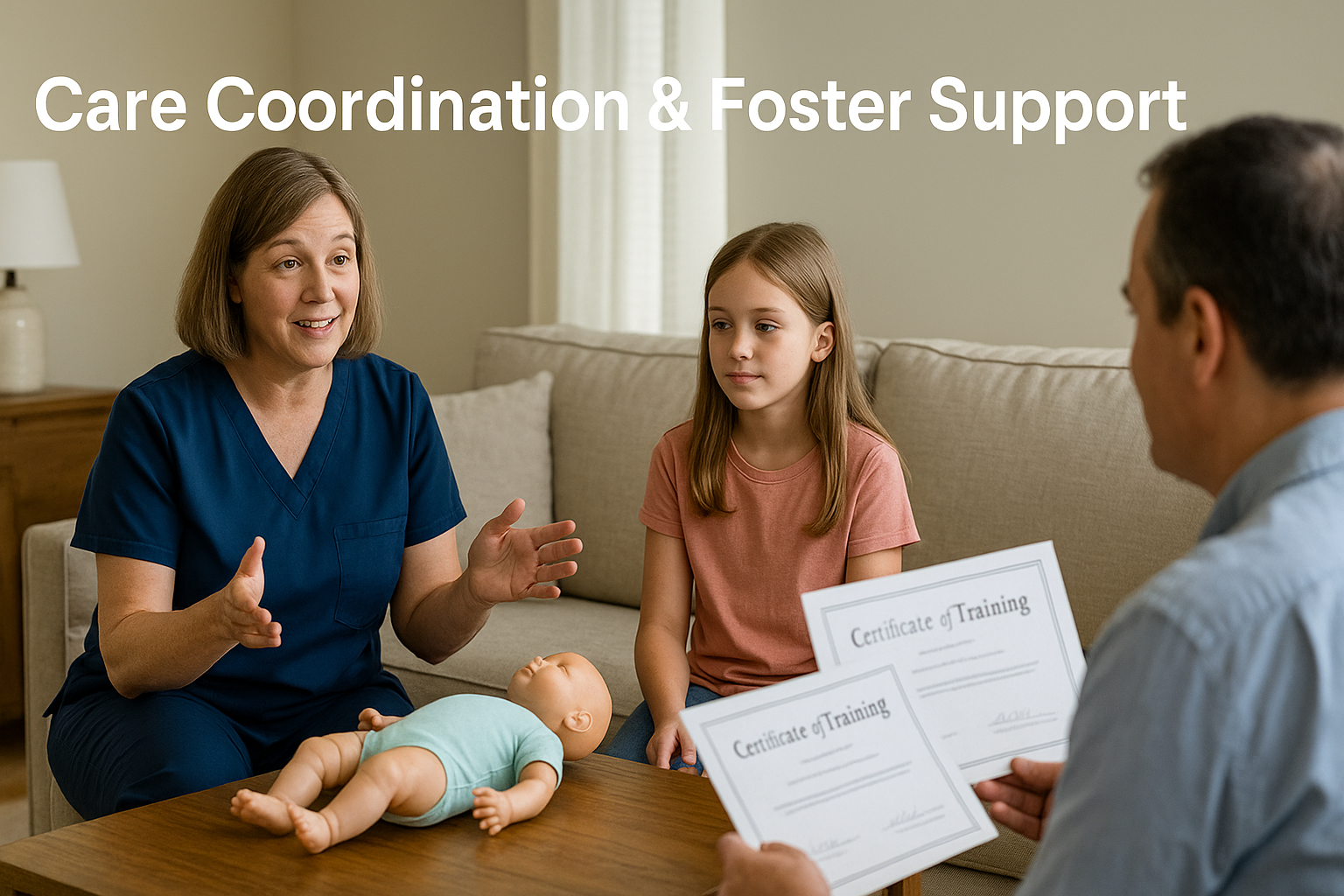
Care Coordination, Foster Support & Training
It all begins with an idea.
Care Coordination & Foster Home Support | Free Hands‑On Trainings
We stabilize complex placements with rapid staffing, family‑centered care plans, and free, hands‑on clinical trainings for caregivers (with certificates).
Why coordination is care
When a child’s health needs intersect with the child welfare system, communication can make or break stability. We connect the dots between families, DFCS/CPAs, physicians, therapists, schools, and DME partners so care plans actually work in daily life.
What we provide
Rapid onboarding & shift coverage for new or complex foster placements
Family‑centered care plans that align medical orders with real‑world routines
Close communication with case managers, CPAs, and medical homes
FREE hands‑on caregiver trainings led by our Head Nurse, including emergency drills, equipment basics, and medication safety
Certificates for home files to document completed trainings and competencies
Stabilizing placements
Reduce hospital readmissions and placement disruptions
Increase caregiver confidence and consistency
Create predictable routines for siblings and school attendance
Training topics (examples)
Trach and suction basics
Vent alarms and emergency response
Enteral feeding troubleshooting
Infection prevention for central lines
Seizure observation and reporting
FAQs
Is there a cost for trainings? No—our core trainings for foster caregivers are free, and sessions can be tailored.
Do you participate in case staffings? Yes—we attend by phone or in person when possible and provide clear updates and documentation.
Need help stabilizing a foster placement or coordinating complex care? 404‑655‑4637 · acs@alliance‑care.com